Core Engineering Parameters: 14 Industrial-Grade Baselines
In highly mechanized agricultural environments, power transmission accuracy and mechanical loss control directly dictate operational yield. Every pto shaft manufactured by EVER-POWER undergoes rigorous torsional fatigue testing to exceed the following foundational engineering specifications:
- Dynamic Torque Capacity: 210 Nm to 4600 Nm
- Standard Operating Speeds: 540 RPM / 1000 RPM
- Peak Power Rating: 15 HP to 250 HP (Tractor End)
- Cross Journal Dimensions: 22.0 x 54.0 mm up to 42.0 x 104.0 mm
- Tractor Spline Profiles: 1-3/8″ 6-spline, 1-3/8″ 21-spline, 1-3/4″ 20-spline
- Telescopic Tube Geometries: Lemon, Triangular, Star, and Involute Splined profiles
- Torque Limiting Devices: Shear Bolt, Friction Slip Clutch, Overrunning (Free Wheel), Ratchet
- Maximum Articulation Angle: 80° for Wide Angle Constant Velocity (CV) Joints
- Forging Metallurgy: 20Cr / 40Cr High-frequency quenched carbon alloy steel
- Dynamic Balancing Grade: ISO 1940 G6.3 Standard
- Anti-Corrosion Treatment: Electrostatic powder coating, verified via 120-hour salt spray testing
- Operating Temperature Range: -25°C to +85°C
- Master Shield Compliance: UV-resistant Polyamide/Polyethylene (CE & AS Standards)
- Expected MTBF: > 1500 hours under continuous heavy-duty cycles
Mechanical Topology of Power Transfer
Within heavy agricultural machinery architectures, engine torque must traverse physical space to reach trailing or mounted implements. The driveline acts as the flexible mechanical spine connecting the tractor’s power output directly to the implement’s input drive system.
Because tractors navigate undulating paddock terrains, the relative spatial coordinates between the tractor and the implement change continuously. The assembly utilizes universal joints (U-joints) at both ends to compensate for severe angular deviations, while concentric telescopic tubes slide axially to absorb distance fluctuations. This dynamic configuration guarantees unbroken, tridimensional power delivery, driving the massive rotational inertia of slasher blades, the compression rams of balers, or the pneumatic fans of air seeders.

Precision Component Matching for specific Implements

Rotary Tillers & Power Harrows
Operating conditions involve aggressive soil cutting and sudden impacts with subterranean rocks. Heavy-duty friction slip clutches are mandatory here. Upon instantaneous blade jam, the internal friction discs slip, isolating the destructive shockwave and preventing catastrophic gear tooth shearing within the main transmission housing.

Heavy Slashers & Mowers
These require extreme rotational velocities (typically 1000 RPM). When the tractor engine decelerates, the massive kinetic energy stored in the mower deck’s flywheel effect creates a reverse thrust. We integrate an overrunning clutch (free-wheel mechanism) ensuring power flows unilaterally, allowing the implement to spool down safely.
Round & Square Balers
Constant sharp headland turning creates extreme driveline angles. Utilizing an 80° Wide Angle Constant Velocity (CV) joint ensures operators do not have to disengage the driveline during tight maneuvers, maintaining continuous hay compaction and drastically reducing harvesting cycle times.

Orchard & Vineyard Sprayers
Subjected to constant moisture and corrosive chemical agents. We implement specialized zinc-plated or heavily powder-coated tubes paired with double-lip sealed needle bearings to prevent chemical ingress and subsequent grease emulsification. Short wheelbase geometries are standard for narrow vineyard rows.
New South Wales Extreme Environment Analysis & WHS Compliance
Within the Australian agricultural ecosystem, mechanical equipment faces punishing environmental metrics—from the intense tropical humidity of Far North Queensland to the highly abrasive silica dust across the Western Australian wheatbelt. Furthermore, stringent adherence to the Work Health and Safety (WHS) Act and AS 1121.4-2007 agricultural machinery safety standards dictates that absolute shielding of rotating assemblies is a strict legal requirement.
Shielding Integration and UV Resistance
Every assembly exported to the Australian market is enclosed within an impact-resistant polymer master shield. Restraint chains anchor these covers to stationary points on the tractor and implement, allowing the internal steel tubes to rotate at 1000 RPM while the exterior plastic remains completely static, eliminating the risk of operator entanglement. Crucially, the polymer formulation includes high-density UV stabilizers engineered specifically for Australia’s extreme solar radiation, extending the physical integrity of the plastic by over 300% compared to standard untreated polyethylene guards.
Field Engineering Logs: Solutions Across 5 Australian Agricultural Zones
📍 Log 1: Sydney (Blue Mountains Fringe) – Heavy Bush Block Clearing
Client Pain Point: Operating a 100HP tractor with a heavy-duty slasher clearing overgrown scrub. Hidden granite rocks and ironbark stumps caused factory shear pins to snap hourly, creating massive downtime costs.
EVER-POWER Engineering Solution: We replaced the static shear pin setup with a Series 6 driveline featuring a 4-plate heavy-duty friction slip clutch. When the slasher blades suffer an instantaneous jam, the clutch absorbs up to 85% of the destructive peak torque via controlled slippage. The client reported zero mechanical downtime in the first quarter of deployment, increasing clearing efficiency by 40%.
📍 Log 2: Melbourne (Victorian Dairy Basin) – TMR Feed Mixing
Client Pain Point: Starting a fully loaded Total Mixed Ration (TMR) wagon filled with dense, wet silage requires monstrous breakaway torque. Standard cross journals were experiencing rapid metal fatigue and brittle fractures at the yoke ears.
EVER-POWER Engineering Solution: Deployed our heavy-duty Series 8 architecture utilizing oversized 35mm x 106.5mm induction-hardened cross journals. Paired with a calibrated shear bolt mechanism, it permits massive, smooth torque delivery while physically severing the connection only during catastrophic auger jams. Post-installation inspections at 24 months showed no signs of micro-fracturing.
📍 Log 3: Brisbane (Queensland Coastal Belt) – Sugarcane Extraction
Client Pain Point: Tropical monsoonal weather creates extreme mud splatter. Standard needle bearing grease emulsified rapidly, leading to dry-running and complete bearing disintegration within weeks.
EVER-POWER Engineering Solution: Formulated a totally enclosed, low-maintenance driveline system. Tubes received specialized electrophoresis anti-rust treatment, and safety shields were equipped with labyrinth seal rings. Greasing intervals were safely extended to 250 hours. The assemblies performed flawlessly throughout the grueling 4-month wet harvesting season.
📍 Log 4: Perth (WA Wheatbelt) – Pneumatic Air Seeding
Client Pain Point: Air seeder blower fans run continuously at 1000 RPM for up to 16 hours daily. Heat accumulation caused tubular distortion and severe parasitic vibrations, destroying fan housing bearings.
EVER-POWER Engineering Solution: Implemented mandatory G6.3 high-precision dynamic balancing on all components prior to factory dispatch, restricting vibrational amplitude to below 0.5mm at peak velocity. This exactness stabilized the fan bearing operating temperatures at a safe 65°C, eliminating thermally induced mechanical failures.
📍 Log 5: Adelaide (Barossa Valley) – Vineyard Airblast Spraying
Client Pain Point: Extremely narrow trellis rows required the tractor to execute zero-radius turns at the headlands. Standard straight-line drivelines suffered mechanical binding and tube buckling during these maneuvers.
EVER-POWER Engineering Solution: Integrated an 80° Wide Angle CV (Constant Velocity) joint on the tractor end. Operators no longer need to disengage the clutch during tight U-turns. The pump maintains continuous, uniform hydrostatic pressure, ensuring perfectly consistent chemical atomization across the entire canopy.
Component Selection Matrix
Mismatched torque ratings cause severe power transmission inefficiencies and catastrophic implement damage. By calculating the prime mover’s horsepower, measuring U-joint dimensions, and identifying implement-side load characteristics, optimal series selection is achieved. Reference the baseline matrix below:
| Industrial Series | Cross Journal Size (mm) | Tractor Rating (540 RPM) | Tube Profile | Typical Implements |
|---|---|---|---|---|
| Series 1 | 22.0 x 54.0 | 15 – 20 HP | Triangular / Lemon | Compact fertilizer spreaders, light tillers |
| Series 4 | 27.0 x 74.6 | 35 – 50 HP | Triangular / Lemon | Medium slashers, boom sprayers, feed augers |
| Series 6 | 30.2 x 92.0 | 60 – 80 HP | Star / Triangular | Heavy rotary hoes, forage harvesters |
| Series 8 | 35.0 x 106.5 | 100 – 140 HP | Star / Splined | Large square balers, heavy soil stabilizers |
Cross-Platform Compatibility & Replacement Ecosystem
Machine sheds typically house equipment sourced from diverse global manufacturers. EVER-POWER has engineered its product line based on exhaustive dimensional analysis of international standards. Whether replacing European metric lemon profiles or North American involute splined yokes, our sub-assemblies ensure micrometer-level retrofit accuracy.
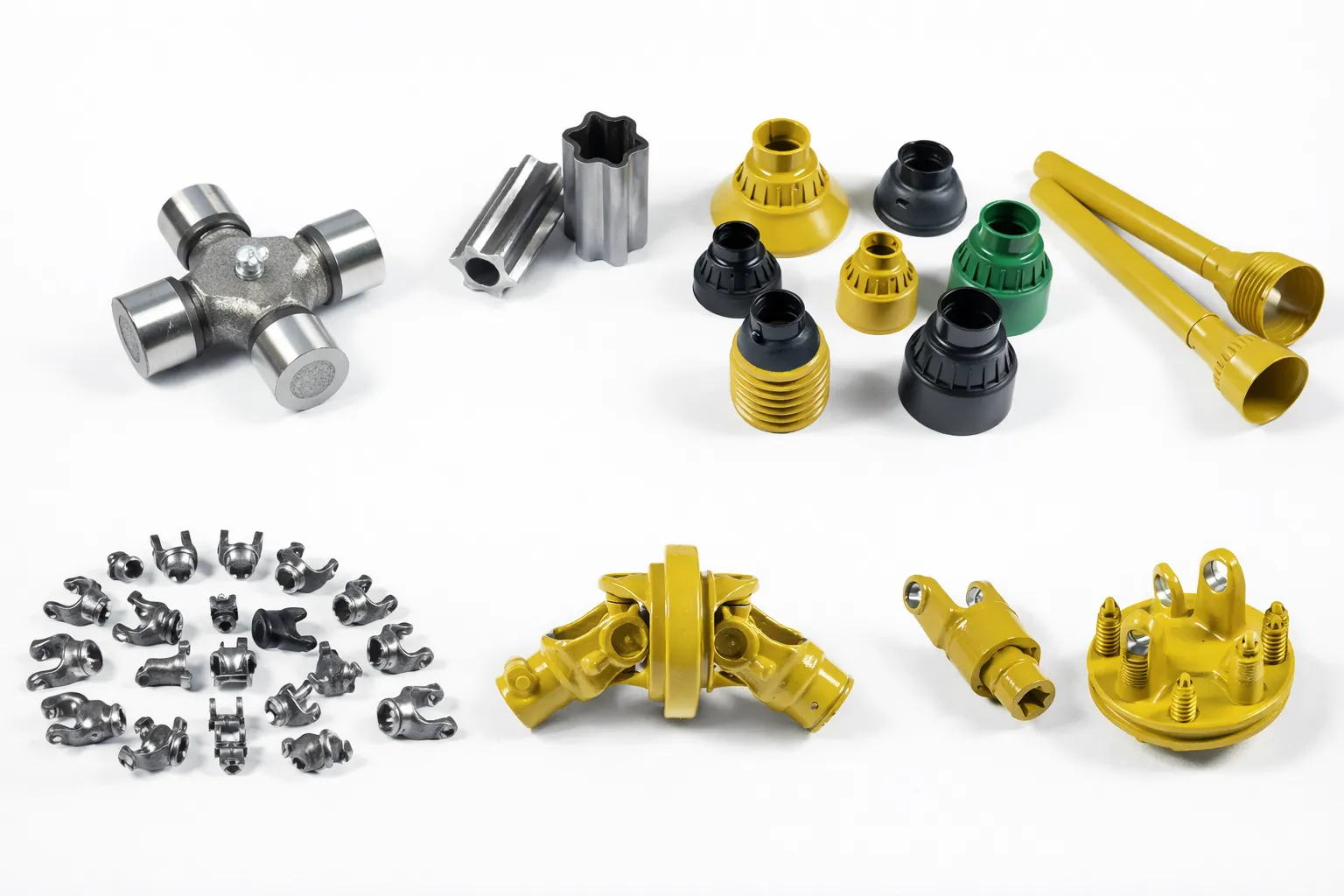
We maintain extensive inventories of consumable replacement parts, including individual U-joint kits with grease zerks, quick-disconnect splined yokes, friction discs, shear bolts, fully enclosed plastic guards, and locking push-pins. Rapid dispatch ensures minimal operational delays during peak harvest windows.
The Terminus of Power Flow: Agricultural Gearbox Architecture
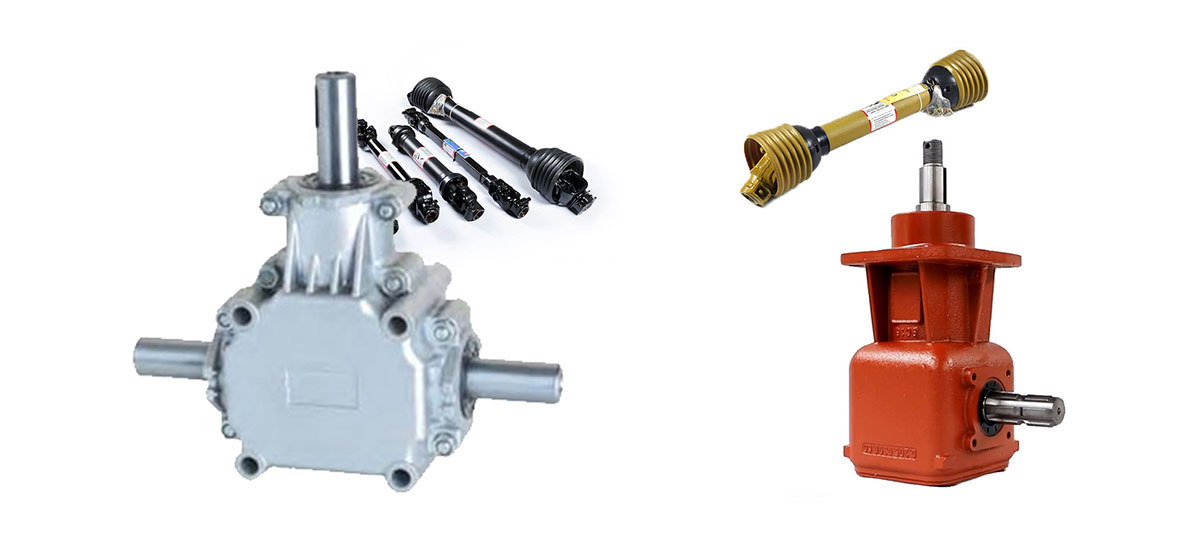
If the rotating shaft represents the arteries of mechanical transmission, the agricultural gearbox serves as the mechanical heart, converting raw, linear rotational kinetic energy into localized, specific operational force. Modern tractor configurations deliver a constant PTO output speed (typically 540 or 1000 RPM) to the implement’s primary connection point. However, the rotational requirements of a mower’s horizontal blade deck, a tiller’s churning soil tines, or a grain auger’s vertical lifting screw are drastically different in terms of both axis orientation and torque multiplication. Customized agricultural gearboxes perform this critical vector redirection and gear ratio reduction.
Vector Redirection and Metallurgical Integrity
The most prevalent configuration is the Right-Angle Bevel Gearbox. It shifts the rotational plane exactly 90 degrees to drive vertically suspended mower decks while utilizing specific gear tooth counts to multiply torque. EVER-POWER fabricates gearbox housings from premium HT250 grey cast iron or ductile iron. These specific metal grades provide exceptional acoustic dampening and immense tensile rigidity, ensuring that under severe load spikes, the bearing bores do not distort. Bearing alignment remains perfectly rigid, preventing premature gear mesh failure.
The internal spiral bevel gear sets are forged from 20CrMnTi low-carbon alloy steel. Through a meticulous carburizing and quenching process, the gear surface hardness reaches HRC 58-62 while retaining a ductile core. This “hard shell, tough core” micro-structure allows the gears to resist immense surface friction while absorbing the brutal shockwaves sent backward when an implement strikes bedrock.
Thermal Management & Tribology Under Extreme Loads
Subjected to ambient temperatures exceeding 45°C during the Australian summer, internal gearbox oil temperatures can spike dangerously. Elevated temperatures slash oil viscosity, leading to metal-on-metal contact, galling, and rapid destruction. EVER-POWER implements high-surface-area cooling ribs embedded into the casting architecture. Furthermore, input and output shafts are secured with double-lip Viton (fluoroelastomer) oil seals that withstand temperatures up to 200°C. These seals act as a fortress, locking in the Extreme Pressure (EP) gear lubricants (such as SAE 85W-140) while actively repelling abrasive silica dust and water.
System-Level Synergy: Seamless Spline Engagement
A robust gearbox requires a flawless connection to the driveline. The implement-side yoke must slide onto the gearbox input shaft with micrometer precision. A loose spline fit causes violent hammering and rapid tooth fretting, while an overly tight fit makes field maintenance impossible. By adhering strictly to ISO 500 tolerancing for 6-spline and 21-spline profiles, our complete systems guarantee perfect sliding engagement. For complex multi-stage implements, we provide Through-Shaft gearbox designs, allowing power to drive the primary mechanism and pass directly through the housing to operate secondary attachments further down the implement chassis. EVER-POWER engineers deliver a unified, unbreakable chain of power.
EVER-POWER: Vertical Integration from Billet to Final Assembly
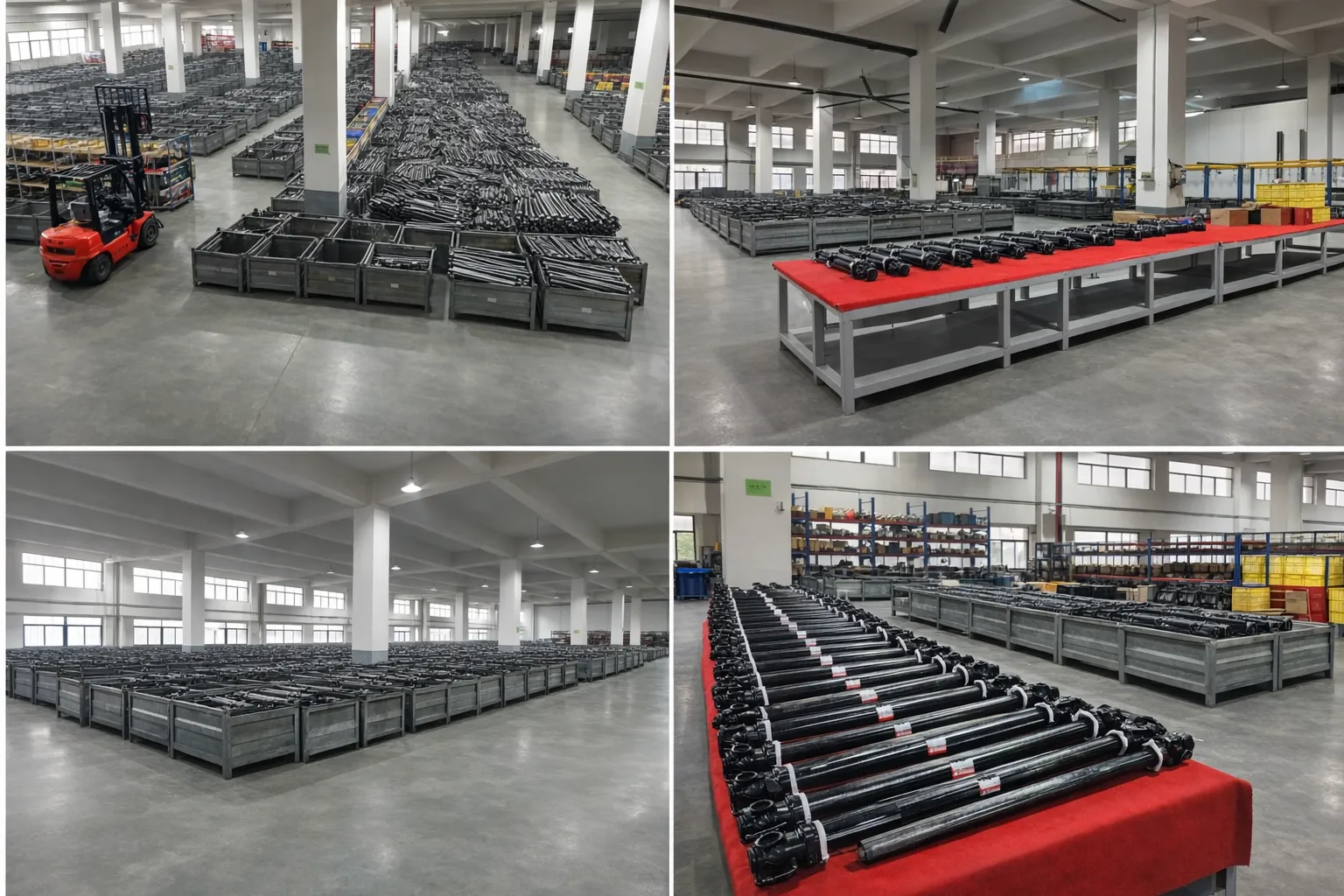
EVER-POWER stands as a premier global manufacturer dedicated to mechanical power transmission solutions. We operate a fully vertically integrated production facility encompassing raw steel cutting, high-temperature die forging, CNC precision turning, automated welding, and rigorous load testing. This closed-loop manufacturing ecosystem grants us absolute authority over quality control and cost efficiencies.
Beyond our massive catalog of standard pto shaft assemblies, we recognize that innovative agricultural equipment demands bespoke solutions. EVER-POWER operates an advanced non-standard customization engineering center. Whether you require anomalous tube lengths, specialized high-torque flanges, or proprietary safety clutches, simply provide technical drawings or physical samples. Our engineering team executes rapid prototyping and bespoke mold creation in industry-leading turnaround times.
Contact our engineering desk today: [email protected]
Technical Troubleshooting & Field Operations (FAQ)
1. How is the correct Closed Length measured for a replacement unit?
With the implement unhitched, collapse the telescopic tubes entirely until they bottom out. Measure the straight-line distance from the center of the cross journal on the tractor side to the center of the cross journal on the implement side. This measurement represents the absolute minimum operating length.
2. Is it permissible to manually cut the tubes if the assembly is too long?
Yes. Separate the inner and outer halves, attach them to the tractor and implement respectively, and hold them parallel to mark the overlap. You must cut exactly the same amount of steel from both the inner tube and the outer tube. File all internal and external burrs smooth, apply lithium grease, and reassemble.
3. What dictates the choice between a Shear Bolt and a Friction Slip Clutch?
Shear bolts are sacrificial; upon severe impact, the bolt physically snaps to sever power transfer, requiring manual replacement before operations can resume. A friction slip clutch absorbs the peak impact by allowing internal steel/friction plates to slide against each other briefly, immediately resuming normal drive once the obstruction passes. Use slip clutches for implements prone to frequent jamming, like rotary hoes in rocky soil.
4. What is the mandatory greasing interval for universal joints?
Under standard agricultural conditions, pump EP-2 lithium grease into the cross journal zerks every 8 operating hours (daily). If operating in heavy dust or mud, increase this frequency. The internal telescopic sliding profiles should be separated, cleaned, and heavily greased every 20 hours to prevent binding.
5. Must the drive be disengaged during headland turning?
With standard U-joints, operating at angles exceeding 15-20 degrees causes severe cyclical speed variations, inducing violent vibrations and rapid bearing destruction. The drive must be disengaged. If equipped with a Wide Angle CV (Constant Velocity) joint, operators can maintain power delivery through angles up to 80 degrees.
6. What causes sudden, violent vibrations during high-speed operation?
Common culprits include: 1) Crushed needle bearings in the cross journal causing radial play. 2) A bent telescopic tube from striking the tractor drawbar. 3) Incorrect Phasing. If the tubes were separated and reinserted incorrectly, the inner and outer yokes are no longer perfectly aligned, causing massive torsional oscillation.
7. How do Lemon profiles compare to Triangular tube profiles?
Both are European-standard geometries. Lemon profiles provide superior resistance to bending fatigue over long spans. Triangular tubes offer flat contact surfaces, allowing them to handle higher peak torque transmission without twisting. Profile selection should match the implement’s original factory specifications to ensure guard compatibility.
8. When is an Overrunning Clutch structurally necessary?
Implements with massive rotational inertia (like large slashers or flywheel chippers) act as flywheels. When the tractor throttle is cut, this stored energy will back-drive the tractor transmission, pushing the tractor forward dangerously. An overrunning clutch automatically disengages, acting like a bicycle freewheel, allowing the implement to spool down safely.
9. Can machinery be operated with cracked or missing plastic safety guards?
Absolutely not. Operating with compromised shielding is a critical safety violation under WHS regulations. A steel shaft rotating at 540 RPM will instantly snag loose clothing, causing catastrophic injury or death. Equipment must be locked out until a fully compliant, chained master shield is installed.
10. Why must slip clutches be “slipped” at the start of a new harvest season?
During months of shed storage, atmospheric humidity causes the internal friction discs to rust and physically fuse to the steel pressure plates. If engaged without preparation, the clutch acts solid and fails to protect the driveline. Operators must loosen the tension bolts, run the machine to induce a controlled 2-second slip to break the rust bond, and then re-torque the springs to exact factory heights.